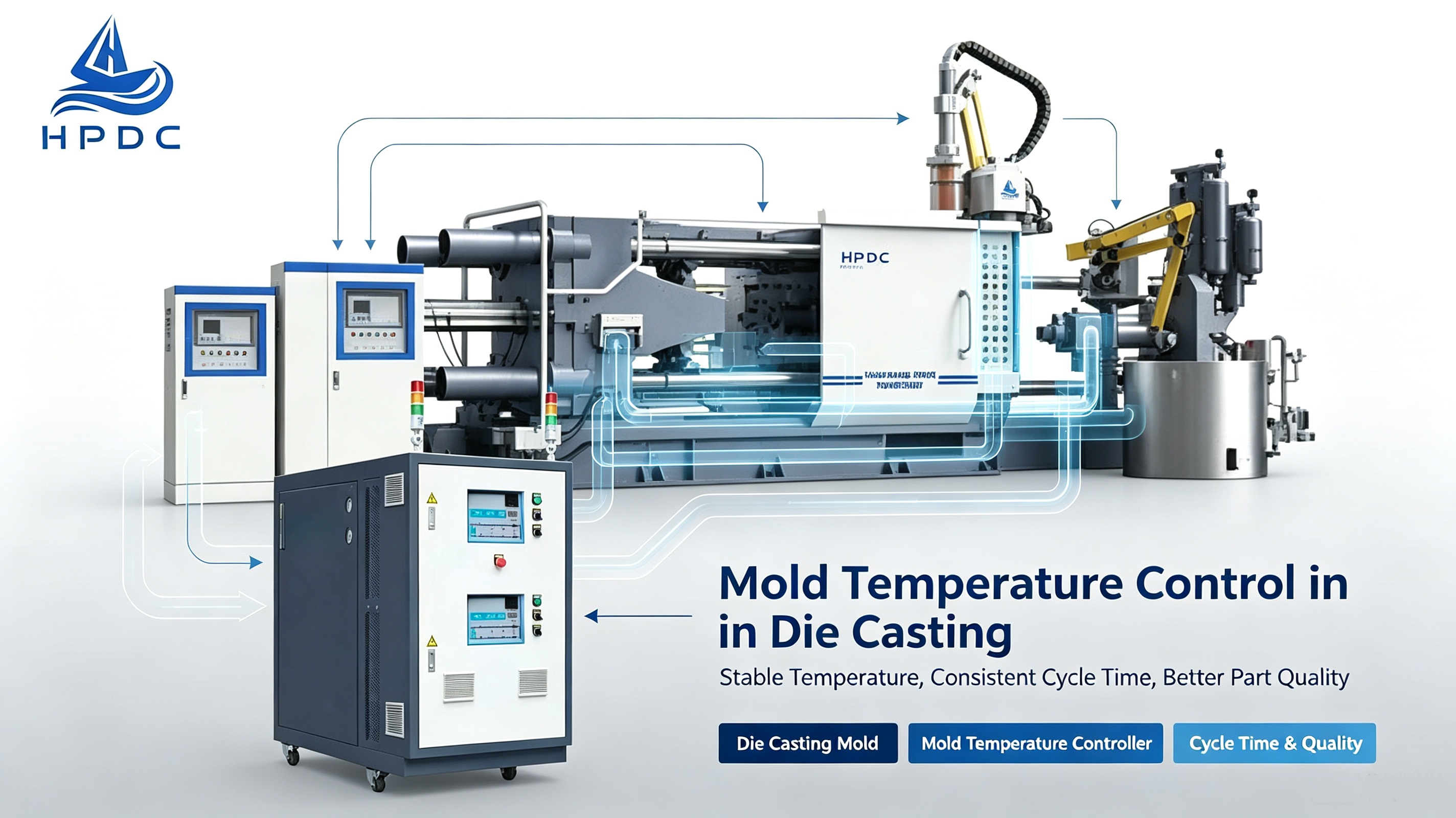
Die Formtemperatur ist einer der kritischsten Prozessparameter beim Hochdruck-Druckgießen. Eine zu hohe Formtemperatur verlangsamt die Erstarrung und verlängert die Zykluszeit; eine zu niedrige Formtemperatur führt zu Kaltfließstellen und unvollständiger Füllung. Eine stabile Formtemperatur – typischerweise zwischen150 °CUnd250 °CFür Aluminium-Druckguss – bietet es die beste Balance zwischen Füllqualität, Erstarrungsgeschwindigkeit, Fehlerrate und Werkzeugstandzeit.
Wichtigste Erkenntnisse
- Die Chiptemperatur steuert direktErstarrungsgeschwindigkeit, Füllverhalten und ZykluszeitDie
- BeideÜberhitzung und Unterhitzungdie Produktionseffizienz verringern und den Ausschuss erhöhen.
- Ein stabiler Temperaturbereich von150–250 °Cist im Allgemeinen optimal für Aluminium-Druckguss.
- Eine ordnungsgemäße Temperaturregelung verlängertLeben sterbendurch Verringerung von Hitzerissen und Temperaturschocks.
- Verwendung einesFormtemperaturregelungDie Verwendung einer Hochdruck-Druckgießmaschine ist die zuverlässigste Methode, um eine gleichmäßige Formtemperatur zu gewährleisten.
1. Warum die Werkzeugtemperatur beim Druckgießen wichtig ist
Beim Hochdruck-Druckgießen wird flüssiges Aluminium unter hohem Druck und hoher Geschwindigkeit in eine Stahlform eingespritzt. Die Form muss heiß genug sein, damit das Metall vollständig in den Formhohlraum fließen kann, bevor es erstarrt, aber gleichzeitig kühl genug, um das Bauteil schnell zu erstarren, damit der Zyklus wiederholt werden kann.
Bei instabiler Werkzeugtemperatur wird die Kontrolle aller anderen Parameter – Schussgeschwindigkeit, Nachdruck, Abkühlzeit – erschwert. Die Folge sind in der Regel längere Zykluszeiten, höherer Ausschuss und kürzere Werkzeugstandzeiten.
2. Was passiert, wenn der Würfel zu heiß ist?
Eine überhitzte Matrize verlangsamt die Erstarrung. Das Aluminium bleibt länger flüssig, was Folgendes bedeutet:
- Längere Abkühlzeitvor dem Auswurf
- Höheres Risiko interner Schrumpfungsporosität
- Oberflächenfehlerwie z.B. Löten oder Kleben
- Kürzere Lebensdaueraufgrund beschleunigter thermischer Ermüdung und Hitzeprüfung
In der Produktion sieht es oft so aus, als ob ein überhitzter Werkzeug zunächst „in Ordnung“ liefe, aber die Zykluszeiten verlängern sich und die Fehlerraten steigen allmählich an.
3. Was passiert, wenn der Würfel zu kalt ist?
Eine kalte Form führt dazu, dass die Oberflächenschicht aus geschmolzenem Aluminium zu schnell erstarrt, bevor die Füllung vollständig ist. Häufige Probleme sind:
- Kaltabschaltungenwo zwei Metallfronten aufeinandertreffen, ohne zu verschmelzen
- Unvollständige Ausfüllung(Fehlläufe) in dünnen Abschnitten
- Längere Verweilzeitda die Betreiber dies durch Anpassung der Parameter kompensieren.
- Schäden durch Thermoschockdie Werkzeugoberfläche vor plötzlichen Temperaturschwankungen schützen
Eine Kaltformung scheint die Teile zwar schneller abzukühlen, doch der Gesamtzyklus ist oft länger, da Parameter wiederholt angepasst und Ausschussteile neu gegossen werden müssen.
4. Der optimale Bereich: 150–250 °C für Aluminium-Druckguss
Bei den meisten Aluminium-Druckgussanwendungen ist es wichtig, die Formoberflächentemperatur innerhalb von150 °C bis 250 °Cbietet die beste Balance. Innerhalb dieses Bereichs:
- Geschmolzenes Aluminium füllt den Hohlraumeinheitlich und vollständig
- Die Erstarrung istgleichmäßig und kontrollierbar
- Die Abkühlzeit beträgtminimiert, ohne die Teilequalität zu beeinträchtigen
- Die Defektraten bleibenniedrig und konstant
- Die Würfelerfahrungengeringere thermische Belastung, Verlängerung der Lebensdauer
Die genaue Zieltemperatur hängt von der Legierung, der Teilegeometrie, der Wandstärke und den Anforderungen an die Zykluszeit ab.
5. Vergleich: Chiptemperaturbedingungen und ihre Auswirkungen
Parameter
Reduziert (thermischer Schock)
Excessively High DieTemperatur
zu niedrige Chiptemperatur
Stabile optimale Temperatur
Erstarrungsgeschwindigkeit
Langsam
Zu schnell (Oberfläche)
Einheitlich und vorhersehbar
Abkühlzeit
Verlängert
Verlängerte Verweilzeit
kürzestmöglicher Weg
Füllverhalten
Akzeptabel, aber riskant
Unvollständige Füllung, Kaltabschaltungen
Gleichmäßige Füllung
Fehlerrate
Innere Schrumpfung, Oberflächenfehler
Kaltabschaltung, unvollständige Füllung
Niedrige Fehlerrate
Zykluszeit
Lang
Lang (aufgrund von Anpassungen)
Kurz und stabil
Leben sterben
Reduziert (Hitzerisse, Materialermüdung)
Erweitert
Gesamteffizienz
Niedrig
Niedrig
Hoch (verbesserte Gesamtanlageneffektivität)
6. Wie man eine stabile Chiptemperatur aufrechterhält
Die zuverlässigste Methode ist die Verwendung eines/einerFormtemperaturregler(auch als Formtemperaturregelung bezeichnet) ist an die Druckgießmaschine angeschlossen. Die Steuerung leitet erhitztes Öl oder Wasser durch Kühlkanäle in der Form und hält so eine konstante Temperatur während des gesamten Produktionsprozesses aufrecht.
Zu den bewährten Verfahren gehören:
- Vorwärmen des Werkzeugs auf die Zieltemperaturvor Produktionsbeginn
- Verwendungseparate Temperaturzonenfür komplexe Werkzeuge mit dicken und dünnen Abschnitten
- Überwachung der Werkzeugoberflächentemperatur mitKontakt- oder Infrarotsensoren
- Kühlungskanälesauber und frei von Kalkum die Wärmeübertragungseffizienz aufrechtzuerhalten
- Kopplung des Temperaturreglers mit einemHochleistungs-Druckgussmaschinefür stabile Schussparameter
Häufig gestellte Fragen
1. Was ist die ideale Werkzeugtemperatur für den Aluminium-Druckguss?
Für die meisten Anwendungen im Aluminium-Druckguss ist eine Werkzeugoberflächentemperatur zwischen 150 °C und 250 °C optimal. Der genaue Wert hängt von der Legierung, der Bauteilgeometrie und der Wandstärke ab.
2. Kann eine Form beim Druckgießen zu heiß werden?
Ja. Ein überhitztes Werkzeug verlangsamt die Erstarrung, verlängert die Zykluszeit, erhöht die innere Schrumpfung und Oberflächenfehler und beschleunigt den Werkzeugverschleiß durch thermische Ermüdung.
3. Wie beeinflusst die Chiptemperatur die Chiplebensdauer?
Sowohl Überhitzung als auch Unterhitzung verkürzen die Lebensdauer von Werkzeugen. Überhitzung führt zu thermischer Ermüdung und Rissbildung; Unterhitzung verursacht Thermoschock durch rasche Temperaturänderungen. Ein stabiler, moderater Temperaturbereich minimiert beide Schadensarten.
4. Benötige ich einen Formtemperaturregler für den Druckguss?
Für eine gleichbleibende Produktionsqualität ist ein Formtemperaturregler unerlässlich. Er hält die Form während des gesamten Produktionsprozesses auf einer stabilen Temperatur, wodurch Fehler reduziert, die Zykluszeit verkürzt und die Lebensdauer der Form verlängert wird. Dies ist besonders wichtig für den Druckguss in großen Stückzahlen oder bei Präzisionsdruckguss.
Eine stabile Werkzeugtemperatur ist die Grundlage für eine effiziente und qualitativ hochwertige Druckgussproduktion.Hochdruck-DruckgussmaschinenUnsere Maschinen sind für die nahtlose Integration in Formtemperaturregelungssysteme konzipiert und gewährleisten eine gleichbleibende Schussleistung sowie zuverlässige Temperaturregelung beim Guss von Aluminium-, Zink- und Magnesiumlegierungen. Wenn Sie Ihr Druckgussprojekt besprechen oder die passende Maschinenkonfiguration finden möchten, kontaktieren Sie unser Team für professionelle technische Unterstützung und maßgeschneiderte Lösungen.